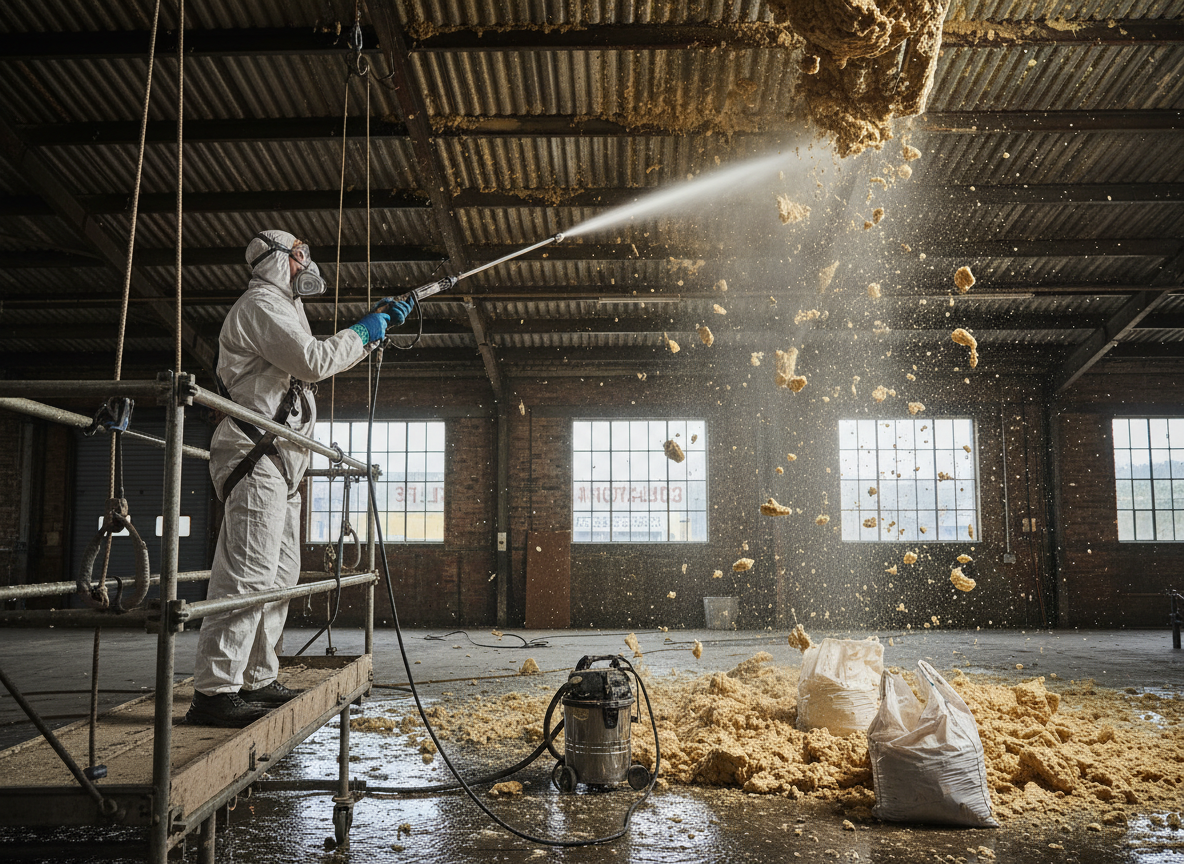
Sheffield warehouses, many built during the city’s steel and cutlery era, often feature corrugated metal roofs, brick walls and timber trusses that trap spray foam in hard-to-reach voids. Cold, damp winters combined with frequent rain mean moisture frequently sits behind the foam, complicating removal and raising the risk of hidden corrosion on steelwork. Experienced crews work section by section, using negative-air machines to contain dust while cutting the foam free without damaging the original structure.
Edge cases include foam applied over asbestos-containing insulation boards in pre-1980 buildings and foam that has expanded into electrical trunking or sprinkler pipework. UK fire safety and waste regulations require separate bagging of contaminated material and documented disposal at licensed sites; skipping these steps leaves the building owner exposed. Crews also check for residual isocyanates before handing the space back, especially in units that will be re-let quickly.
Access is often limited to goods doors or roof hatches, so equipment must be broken down and carried in by hand. In multi-let units on the edge of the city centre, night or weekend shifts are common to avoid disrupting neighbouring tenants. Final verification includes moisture readings on timber and steel plus photographic records of cleared areas for the building owner’s files.
Technician insight
In Sheffield, the thing that catches most people out with Warehouse spray Foam removal is how our wet winters push moisture into the brick and steel of older Attercliffe and Brightside mills, so the foam bonds tighter and releases more dust than the same job in a drier building.
Former cutlery works, Attercliffe
Foam had been sprayed across the roof deck of a 1920s warehouse now used for storage. Hidden damp from years of roof leaks had caused the foam to bond directly to corroding steel purlins. We isolated the bay overnight, removed the foam in sections, treated the exposed steel, and left the owner with a dry, documented space ready for new tenants.
How it works
- 1
Site Survey and Risk Assessment
Measure the affected warehouse area, identify substrate types, note any asbestos or electrical hazards, and confirm access routes before work begins.
- 2
Containment and Dust Control
Erect polythene barriers, set up negative-air filtration, and seal adjacent bays to prevent foam particles migrating into occupied spaces.
- 3
Mechanical Removal
Cut and peel foam in controlled sections using specialist tools, bagging waste immediately for licensed disposal.
- 4
Substrate Cleaning and Verification
Remove residue, check moisture levels on steel and timber, and provide photographic evidence that the space is clear.
Pricing
Upfront quotes after on-site inspection; final cost depends on foam thickness, access difficulty and waste volume.